

About the digestive system of koi·
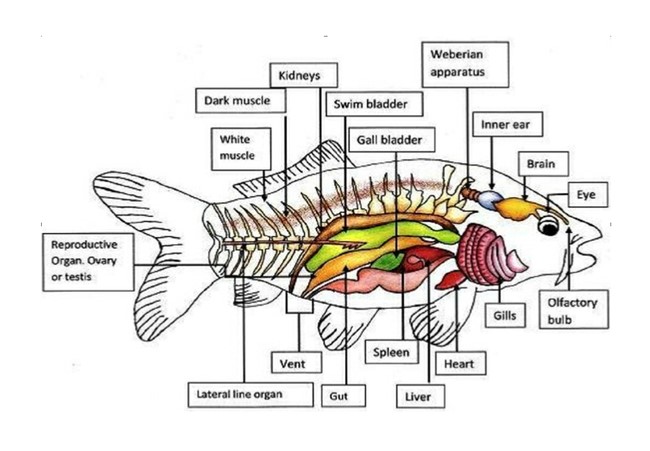
Koi fish have quite a special digestive system, the digestion process begins when Koi fish chew and grind food into small pieces, the food will go to the back of the throat where the teeth work. Unlike other fish, these Koi teeth are not located in the mouth but in the throat area – called pharyngeal teeth, where food is broken down for easy digestion. Koi's teeth are also more distinctive as bony protrusions that grow from the bottom of the gill plates at the back of the throat.
Food after being crushed will go to the intestines to continue the digestion process. At this point, you will be surprised and ask the question " So where is the stomach of Koi fish?", another special thing of Koi fish is that they do not have a stomach, instead a long intestine and have the ability to expand to receive a large amount of food. The absence of a stomach means that food cannot be processed by acid to break down into nutrients, so the intestines of fish use enzymes to aid in the creation of usable nutrients, while the bacteria in the intestines of Koi fish will break down waste products and produce other nutrients. These nutrients will be absorbed into the Koi's body through the intestinal wall. The majority of enzymes come from the pancreas, which are produced in abundance here and delivered into the intestine through a duct
Next, food will go into the liver to be filtered and remove toxic substances in the blood. The gallbladder of Koi fish is also very important in the process of digesting food, because it secretes digestive juices that help fish digest food and absorb nutrients.
At the end of the digestion of food, waste products and substances that are not necessary for the fish will be eliminated through the anal canal. Here all residue is excreted
With the special characteristics of the digestive system, koi fish has become a fairly diverse eating fish. To take care of the digestive system of Koi fish, you need to provide them with a complete and balanced diet. Koi fish food needs to contain enough nutrients such as protein, carbohydrates, lipids, and vitamins. Koi fish are omnivorous, so you can feed them natural foods such as green vegetables, fruits, and other fresh foods to help their digestive system work better. In addition, you need to make sure that the water in the aquarium is always clean and free of harmful substances to ensure that the digestive system of Koi fish is healthy.
Pathologies related to the digestive system of Koi fish are often difficult to detect. If the koi's digestive system is not working properly, the fish may experience problems such as diarrhea and constipation. To avoid these problems, you should regularly monitor the health of the fish, provide food and take care of the fish properly so that they can grow smoothly and promote their characteristic beauty.